


Originally posted: on November 18th, 2018, and updated on: January 29th, 2026
Well, I kind of added to the name of the business which is actually just “Tokyo Premium Bakery” or “TPB” for short (or my version TFHP1B).
Finally, another place with actual Nihonjin in it. They didn’t just use the word ‘Tokyo’ like they were trying to fake the funk, unlike all the other places in Colorado (ahem, Tokyo Joe’s, which has very little to do with being Japanese).
There aren’t a lot of Japanese in Colorado, compared to other Asians, so I’m super fresh happy that TPB is in Denver: 1). Chinese (excluding Taiwanese), 47,000, 2). Filipino, 36,000, 3). Indian, 34,000–35,000, 4). Korean, 33,000, 5). Vietnamese, mid‑30,000s, 6). Japanese, 28,700, 7). Thai, 6,000, 8). Nepalese, 6,700, 9). Native Hawaiian, 8,500 (all Colorado-wide, not Denver-only).
My point, finding actual Japanese restaurants and food is extremely difficult to find in Denver, but Pearl street is the place to go. Also, damn, I never knew there were that many Filipinos here, so where’s all the silog and lechon spots at?!?

Also, note, I added “Fresh Happy Premium #1” if that isn’t clear, which is my Engrish addition.
Pearl Street in Denver, Colorado
Kizaki is the surname of the owners of this parking garage, restaurant space, and the neighboring Sushi Den (yeah, I did a short stint at Sushi Den way back in ancient times), Ototo, Izakaya Den (where Pearl St. Grill used to be located), Kizaki (newly opened), and who knows how many other places on or near Pearl St.

These couple of blocks probably have the most amount of Japanese in all of Denver, and I was really surprised to see the amount of Japanese clientele that I had seen during my visit.
My mom bakes a lot and is known for her cream puffs; I dated a pâtissière in Tokyo (Aoyama), and I have had my fair share of Cream Pan Strawberry Croissants to establish my street cred for this blog post.
Japanese pastries and baked goods from the Donut Man, Cream Pan (I only wish I got to eat their Strawberry Banana Croissant which I swear is a new menu item), and Tokyo Premium Bakery are part of my listing of all the Japanese bakery and pastry shops throughout the United States.

Also, on a slight tangent (as usual with my writing style), I never knew this until I wrote my manuscript, but my great uncle who served with the 442nd during World War II then worked for Vollmers bakery, which had been open since 1932.
Visiting Tokyo Premium Bakery
Walking in, I was familiar with the products and ordering process because I had been going to “85c Bakery and Cafe” in Irvine, California for a number years (I worked across the street). That’s also the same location where that dude had grabbed that Asian chicks butt who was caught on camera doing it.
Japanese pastries and baked goods are less sweet, lighter, and more delicate than American ones, with subtle flavors (like matcha or red bean) and airy textures (fluffy bread, soufflé-like cakes).
American versions are typically denser, richer, heavier, and much sweeter (not Southern hospitality sweet, but diabetes sweet), emphasizing bold indulgence.

Once you enter, to the right of the entrance everything is all laid out.
How to order: be sure to grab some tongs and a tray to place what you want on it, and don’t be that person just grabbing it all up with your meat mittens.
Yeah, I get it, it’s for you, but until you get rung up at the register, you’ll have to keep your grubby hands tongs length away from everything bruuuuh.

This was around 9:45 am, so they had plenty of product out although I hear that if you get there near closing (4:00 pm), they may be totally sold out.

A lot of fruit are used from cherries, blueberries, pineapple, peaches, kiwi, to grapes, but if you’re not into that food group, they have you covered with the custard and chocolate food group.
In East Asia (such as China, Japan, and Korea), fresh fruit is commonly served at the end of a meal and functions as the equivalent of what Western cultures or us Muricans call dessert.
You’ll often hear about premium strawberries, but these aren’t your average everyday fruits. They’re specially grown for exceptional quality, appearance, and sweetness, mainly to be given as omiyage (souvenirs) or other gifts, like to your side piece.


Hey, I like pictures and Asians don’t seem to have any issue taking pics of food, so here you go….

….and another pic.

Oh, I’ve got more and these are just the ones I posted, and I’m sure I’ve got at least a dozen more.
Every spot in Denver now offers matcha, but one of the things I miss most is hojicha, which is roasted green tea. I love it in soft serve form, but a latte will do. TPB is one of the few places, if not the only place I know of, that offers it.
It blows my mind how so many businesses are trend driven which is why we need places like TPB, it’s driven by Japanese culture.

Take it all in.
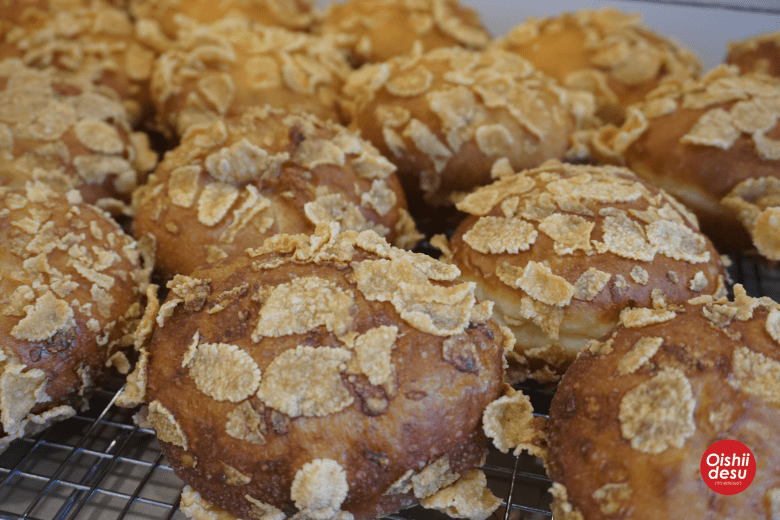
The Japanese and American palate differ bruh: American grape flavor can taste “medicinal” or overly artificial to a Japanese person. In Japan, grape flavor is expected to be much more floral and aromatic, mimicking the skin-peeling varieties they grow locally.
I partially learned this from traveling to Japan, but the couple of trips I took to Korea really put it into perspective, ranging from fruits as gifts to general flavors and uses, such as raisins, diced apples, and corn in a potato salad.

Yup, more pics because show, don’t tell (I feel like the Scorsese of food pics).

I needed my caffeine (hojicha is really low in caffeine FYI), so I went with a large cappuccino otherwise I would have gone with the Japanese specialties.

Now, about that kare pan (Japanese curry bread)
I feel extremely lucky to have a place like TPB open up in Denver, but I was even happier when I saw that they had kare pan.
I had to look this up because I didn’t know the history to one of my favorites which is kare pan (カレーパン, also written as curry bread or curry pan) originated in Japan during the early 20th century, specifically around 1927.
Nigiri and karaage pronunciation are butchered, so I got’chu when it comes to “kare” pan which is kah-reh pahn.

I’ve mentioned this a number of times before, but there are only a small handful of restaurants in Denver that are Japanese operated which means you will very rarely find these type of items here unless they are actually Japanese.

These are a few pics of kare pan from my trip in Hiroshima Japan
In Japan, rice consumption is down and more and more Japanese are eating bread, so combining Japan’s love for curry with “pan” (bread) was inevitable.
We ate these as we island hopped from island to island on bikes, via the Shimanami Kaido (しまなみ海道).
There is a Giant bike store there, but we just happened to be there the one day out of the week they were closed which is Tuesday, FYI.

Unlike the U.S., restaurants in Japan are not competing against an empanada place, a Jewish deli, or a Cuban bakery. They are competing against other Japanese bakeries doing similar items, so the competition is fierce, and the mediocre don’t survive (also the reason why there are more Michelin starred restaurants in Japan than any other place in the world, yeah even in France).

I have pics of a lot of bakeries, but I chose to show this one because they had the best curry pan I had ever had….out of the small handful that I have had (decades ago, I would go to the Clover Bakery in San Jose, California).

Almost a decade later, Butti Bakery in Onomichi is still open. The bakery is located within the ONOMICHI U2 shopping facility, a short walk from Onomichi Station. It’s so fiercely competitive there so I’m happy it’s still open.
In 2024, for the facility’s 10th anniversary (2024).

On one visit, I ran into a bartender from Woods Boss Brewing, which is cool because he has great memory, but also because people from all over Denver come here.

I have my kare pan!
Enough about Japan and curry pan, back to TPB
I expect TPB to have the same longevity, and they have received a ton of recognition to back that: the Westword Best of Denver Award – Best Bakery Sweet (2020), Yelp Top 100 Coffee Shops in the United States (#71), Best Bakery in Colorado, a 5280 Magazine feature, Tasting Table’s 15 Best Bakeries in Denver list, and a 4.8 rating on Google with 1,000 reviews.
Owner Manri Nakayama moved to Denver from Japan specifically to open this bakery in 2018

This is ideal for any office because they independently wrap all your baked goods, so that none of your pastries intermix, kind of like your accounting, marketing, and sales dept.


The operation is run by a team of skilled bakers including pastry chef Hiro Arima, who spent years studying classic French pastries in France.
Online, people often debate how good the Italian food is in Japan, but some also say that Japanese french bakeries often surpass typical French bakeries due to Japanese precision (kodawari) and attention to detail. Also, based on my ex’s work schedule, the crazy amount of hours they put in.


If you work remotely, they don’t have the biggest space, but they typically have ample seating for you and your laptop. Plus, you’ll never go hungry.
Here is my top ranking list of where to work remotely in the Denver metro area.

In the Bay Area, I’d laugh when my homies turn red when they drink alcohol (the ALDH2 gene or Asian glow), but the other issue is that many Asians are lactose intolerant, yet there are so many items with custard.

Cream puffs, shokupan, to matcha
My mom and my ex both specialize in cream puffs although my ex is the one with the credentials since she’s worked in cake shops in Tokyo (in Aoyama), Magnolia’s (from NY), Dandelion Chocolates (from SF), Kulu Kulu (Honolulu), and now Portland. So I have had my fair share of custard and cream based baked goods, and I like the TPB matcha custard.
Shokupan (食パン), commonly known as Japanese milk bread or Hokkaido milk bread, is a soft, fluffy white bread that’s a staple in Japan; TPB actually carries it. I often see it sitting on the shelf behind the counter.
You must order shokupan at least 24 hours in advance for pickup according to their official website. This advance ordering policy is in place because shokupan is an extremely popular item that sells quickly.

Pearl street really doesn’t feel like it has changed much as long as Sushi Den and Stella’s remain there because they’ve both been in business for several decades, 42 years and 35 years.

I wonder if you get free/discounted parking in the parking garage? I have no clue, but they do have parking out front that I found easily although if you’re going to be lounging back here, my spot was only a 2-hour time limit.

With Pearl Street being a hub for all things Japanese, you’ll often see O’baware (Kazu Oba’s salt-fired pottery) popping up next door.
He’s a Coloradan, you can find his work in restaurants in stores New York, Colorado, Wyoming, Maine, to Japan, and you can check out my full blog post on Japanese dinnerware.

I said that TPB is one of the few Japanese bakery spots in Denver, but Denver did get a Japanese chain from Japan that specializes in Japanese-style cream puffs called Beard Papa’s (550 stores across 14–15 countries and they’re now on Colorado Blvd.)
Beard Papa’s is an international chain specializing in Japanese-style cream puffs (known as シュークリーム or choux cream in Japan), and I have a list of every Japanese chain in Colorado.

Is this the most Japanese street in Denver?
Things I highly recommend that you try:
You should know by now what my go-to items are, but here’s a reminder to sum it all up:
- Anything matcha cuz Asian.
- Kare pan (curry bread) cuz chewy, crispy, and savory.
- The Japanese specialty drinks, especially the hojicha latte. The ‘hip’ places in Colorado are just chasing trends, meanwhile TPB is just being straight out Japanese.
- The anko or red bean paste baked goods (try it with a matcha latte) because if you’re vegan, it’s made of beans bruh (Japan was a vegan/pescatarian country for upwards of 1,200 years).
- Shokupan (a loaf of fluffy Japanese bread), it’s partly why people hype 7-Eleven Japan’s egg salad sandwhich.
Tokyo Premium Bakery
1540 S Pearl St
Denver, CO 80210
The “Platt Park” hood
(720) 531-3784
www.tokyopremiumbakery.com
Instagram: @tokyopremiumbakery


Looks delicious. Luckily I am eating some inarizushi from the Asian/whatever they want to sell (including Colombian/Mexican/Turkish) grocery store across the street and you are not making me hungry this time.
That’s along the lines of my rules which is never to look at food whenever hungry, especially late a night or after a night of drinking.
Oh wow! We’re coming through Denver on our way to Yellowstone this summer. I’ve got to try this place out! Everything looks wonderful!
You cook and probably bake, so you’ll be harder to please… I think you’ll like it though.